
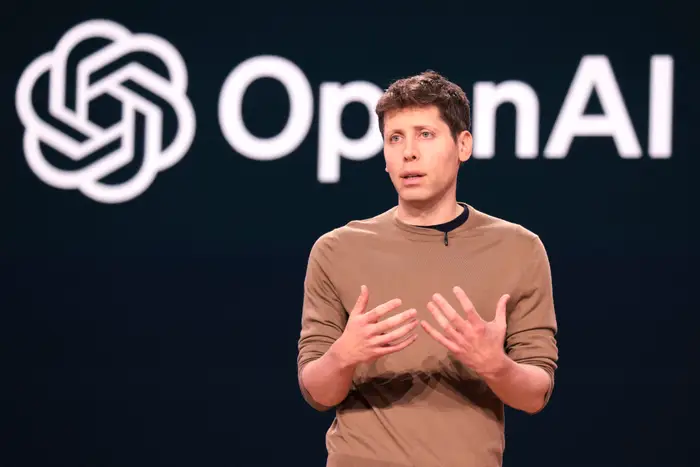
OpenAI’s Skyward Valuation: A Stark New Summit
In August 2025, it was reported that OpenAI will soon be worth an unbelievable 500 billion dollars, possibly becoming the most valuable private business in history, outpacing SpaceX, TikTok parent company ByteDance, and even publicly traded companies like Palantir. This amount represents a resale of employee shares, despite a SoftBank-led round of financing, valued at 300 billion dollars, which remains open.
The logic investors are working under is confounding: a user base of 700 million weekly active ChatGPT users (even a small average monetization rate, such as 5 per user per month, half of what platforms like Google or Facebook monetize) would give way to an annual revenue of 120 billion dollars, which would support a valuation of 1.5 trillion dollars.
Furthermore, the company has experienced a rocket-like growth: within the first seven months of 2025, the company doubled its estimated yearly revenue to hit an annualized run rate of 12 billion. There are also 5 million paying businesses that have moved to enterprise adoption.
The Financial Burn and Uber-Ambitions
When it comes to the business side of the glitz, OpenAI is sobering up. Its expenditure on infrastructure, particularly in data centers, is projected to be in the trillions, and its rate of cash consumption can only be described as insane. Despite the company’s soaring revenue, it is likely to make the costly trade-off of paying extremely high prices in order to keep up with the rapidly increasing demand.
Valuation Skeptics: Is this a bubble?
Fintech experts and commentators are echoing the previous tech manias by claiming that OpenAI is now valued at a 25x revenue multiple, which is only comparable to high-risk businesses like SpaceX and not well-known corporations like Apple or Meta.
Even while OpenAI is expected to generate up to $20 billion in revenue by the end of the year, Reuters reports that less than 10% of its 700 million weekly users are paying customers, raising questions about the quality of monetization.
Broad sentiment in the market is also cautious. In a big MIT report, 95% of AI pilot programs do not pay off, and worries of an AI bubble are building like the dot-com bubble.
Even while OpenAI attempts to reach its valuation objective, Sam Altman has acknowledged the risk in public, saying that the AI sector might be making the same mistakes as the late 1990s technological boom.
Structural Shifts and Internal Tensions
The structure of OpenAI makes the equity narrative tricky. It was started as a nonprofit, and it had a limited-profit subsidiary. Another suggested reorganization that would have reinvented the profit-making division as a public benefit corporation (PBC) caused legal and ethical concerns. The restructuring brought tension into the relationship between alignment ambitions and financial incentives, even though the board of the nonprofit ultimately retained control after resistance.
The Broader Stakes: Why OpenAI’s Valuation Matters
Market Effectiveness & Industry Stability
The growth trajectory of OpenAI, one of the pillars of the AI industry, has a disproportionate impact. If it doesn’t, it might negatively affect other AI investors; therefore, it should not rely too much on its success to cause instability.
Strategic Dependencies
Recently, OpenAI has diversified its tech alliances, partnering with Broadcom on the development of custom AI chips, signing an 11.9 billion-dollar infrastructure contract with CoreWeave (with access to GPUs), and integrating Google Cloud TPUs to lessen its dependence on Nvidia and Azure. These actions highlight why it has to deal with the increasing costs of computers and stay ahead of its rivals.
The Verdict: Should OpenAI Be Valued at $500 Billion?
Pros:
- Monetization potential and explosive user growth.
- Double-digit revenue and enterprise adoption.
- Pioneering role in AI innovation.
Cons:
- High burn rate and infrastructural costs.
- There is still a bias in monetization favoring a small percentage of users.
- Warning from its own CEO about speculative excess.
- Comparisons to unsustainable bubbles.
The valuation of OpenAI is an indication of not only the present-day performance but the ambition itself. Whether it marks a technology change that is tectonic or a manic peak about to be corrected remains to be seen. It is not only the future of one company that is at risk, but also the larger story of the viability, stability, and influence of AI
Conclusion
The meteoric rise of OpenAI to a potential valuation of $500 billion is a creation score, and a test of economic reality. On the one hand, its unprecedented user adoption, soaring revenues and a series of AI breakthroughs give a sense to a company that can revolutionize entire industries. On the other hand, the read-out-of-this complexity and jaw-dropping infrastructure cost, the lack of predictable monetization opportunities, and the terrifying specter of over-excitement speculation echo the bad omens of previous bubbles.
The question of whether OpenAI should be called the most valuable startup ever is whether it can succeed in balancing ambition and sustainability. When it fulfills its promise, making AI a profitable, ubiquitous, and safe technology, the valuation can one day appear modest. Otherwise, it runs the risk of becoming a warning story of hype in technology. After all, the path of OpenAI is not just a business narrative, but it is an indicator of how society values, regulates, and governs the most disruptive technology of our era.